Showing posts with label food. Show all posts

Tuesday, January 5, 2016

Too Weak?

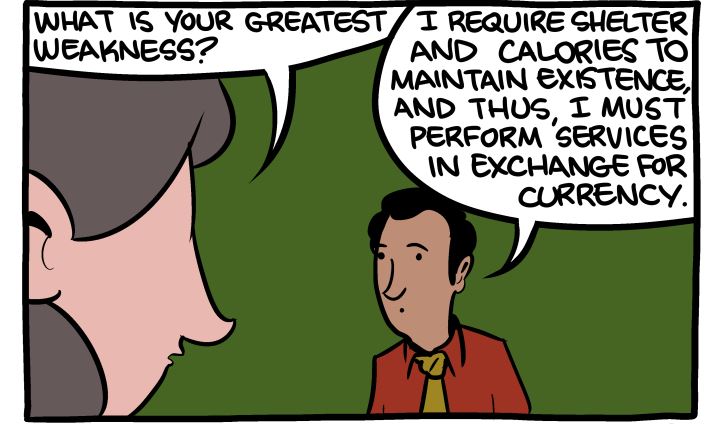
There is a problem with human workers.  Here it is:


Does this mean that ALL exchange is not euvoluntary?  Is it true that we "must" perform services in exchange for currency? I have heard people argue just this point.  Since we need food, all payment for labor is exploitative.  Of course, usually there are many different ways for me to earn money.  But suppose there is only one?  The "company town" thing.

Here is the entire SMBC comic, which is wonderful...  Perhaps the problem is honesty?

Thursday, August 6, 2015

Not-So-Private Idaho

Federal courts ruled that an Idaho statute barring, inter alia, surreptitious filming of livestock treatment is unconstitutional. EV here. Some of the language of the statute is hairshirt nonsense, making criminal trespass and fraud extra-super-triple-secret-illegal, but that's what you get when you write a statute obviously targeting specific activity. In this case, the specific activity is the infiltration of commercial farms by animal rights activists.

I like to think of these sorts of stealthy activist espionage operations as a way of bolstering informed consent. When I visit my in-laws on their little Lithuanian farm (or my buddies Travis and Jen on their little NH farm), I know exactly what conditions my dinner was raised under: by taking a peek outside. My moral aversions are easily and cheaply addressed with a quick inspection. Ditto for slaughtering. If I saw the hatchet fall on the chicken's neck, I needn't fret that it suffered unduly during its last moments. Supermarket meat is a cipher. All I know when I purchase flesh at the store is what the sell-by date is (and even that might be questionable). I can't even accurately judge the quality of the meat by color or turgidity, what with all the dyes and brine processors can get away with adding. PETA operatives filming abattoir floors replaces whatever flights of fancy I might have had about modern animal husbandry with a [carefully edited for maximum outrage] version of the bloody reality. I can eat my hamburger with more accurate information, helping to internalize what were previously external moral costs. On the margin, this might make meat consumption more euvoluntary.

I think that an interesting, related concern is what role autonomous drones will have in the conflict between commercial farmers (well, slaughterhouses more than farmers, most of the time) and animal rights organizations. Typically, to get the objectionable footage, activists would have to commit some sort of criminal trespass or fraud to gain entry to the grounds. What if you could just send a fleet of quadrocopters with decent cameras attached to get your alarming footage? Technology overcomes legislation yet again?

Maybe we'll get lucky and vat-grown animal protein will exceed the quality of its hoof-raised rival before that becomes much of an issue. I'm eager to find out. I can't wait to taste my first lab-burger.

Monday, June 29, 2015

Home Economics Vol 1: Telescopic Morality and Peas

Raise your hands if you were ever told something like "clean your plate because there are starving kids in Africa." Keep them up if you've ever uttered the sentiment. I'd wager that if the readership here is a random selection from the population along this particular issue's dimensions, better than half of you will still have your hands up.

Assuming you're parents of course.

It isn't, after all, something you'd say to a dinner companion or to a stranger in an airport restaurant. It's specifically an injunction you make to your children. It has the overtones of being what my great pal Adam Gurri dismisses as telescopic morality, but only rhetorically. Every child who hears it almost immediately summons the obvious comeback: "if you're so worried about hungry African kids, then mail them my chicken in aspic." Children are sensitive enough to be offended when the suffering of others is deployed as a morality prop.

From the parents' perspective, we want our children to be properly nourished and to have a well-developed palate. Man does not live on peanut butter and jelly alone. Cajoling and bribery doesn't always work, but guilt can sometimes be effective. Still, there's the guilt of "you're breaking your nana's heart; you know she has a weak heart" and then there's accidentally training your children to think of destitute populations as inferiors with no agency of their own.

Part of the Mother's Problem is menu planning. The economics of the household involves a great deal of detailed private information of who eats what, whose tastes are changing because she's eleven now and she doesn't eat kids' cereal anymore, who's decided to go HARDxXxCORE VEGAN because factory farming is an orgy of cruelty, and who needs a little extra fiber in his diet because the cholesterol numbers from the last physical were alarming to say the least. This is no secret to anyone in the house. Indeed, quite a bit of talk at home is split between affirmations of affection (good or bad) and nutrition (again, good or bad). So to associate the nitty-gritty decisions made in front of the hearth with the thorny institutional problems of global poverty is an error of rhetoric that eventually, if not immediately contributes to the injustices of international paternalism.

By all means, get your kids to eat their peas (and if you're a kid, do your suffering mother a favor and eat your peas), but please reconsider using the suffering of others as a crowbar to pry open recalcitrant jaws. A better, more just world will include the children of poor countries having better access to trade opportunities. Training another generation to think of the destitute as little more than charity cases is a lousy way to improve political and economic institutions.

Friday, June 26, 2015

Manliest Thing Ever?

Wastin' food.

According to a household survey (n=1000) conducted by the American Chemistry Council, US households "waste" $640 worth of food a year.

I don't know about you guys, but my household wastes $0 of food per year. Once it goes in the garbage, it has a residual consumption value of nil, perhaps even negative since I'll pay to have it removed.

Economists take great pains to teach incoming students the difference between sunk accounting costs and prospective economic costs. What you paid for that now-expired quart of buttermilk down at the Piggly Wiggly is not its current economic value. What it's worth to you is the pleasure you'll get out of eating the delicious waffles you'll turn it into.

Now, it may be that people sometimes throw out spoiled food, but the alternative is either the wasted time and effort involved in scrupulously planning and executing a rigorous nutritional intake plan or it's having bare shelves once in a while. The former might suit some personality types, but I'd balk at imposing it on anyone. And the latter? The latter might have been okay when I was 20 years old living on my own. But I have mouths to feed. If that means I have to chuck the occasional moldy potato, you can bet your bottom dollar that's just what I'll do.

But don't tell me I'm throwing out $640 worth of food. I'm not. I'm discarding rubbish.

If reducing food waste is more euvoluntary, then genetically modifying or treating produce with heat, chemicals, and radiation are great ways to increase self life. I do prefer the flavor or organic, vine-ripened fruits and vegetables, but that stuff just does not last long.

Thursday, June 25, 2015

When Comdiments Are Outlawed, Only Outlaws Will Have Condiments

So, schools are trying to "nudge" students toward eating more healthy foods.

But when the nudge doesn't work, they use a bludgeon.  School authorities are not really interested in nudging after all.  They want compliance.

Still, those rebellious little squeakers want lunches that they can actually eat.  Some of them have the audacity to bring to school (wait for it).... CONDIMENTS!  Salt, pepper, even sugar.

The obvious next step in a prison environment (and a public school cafeteria is pretty close to a prison environment) is exchange.  So the younglings are trading, and even selling, their salt and pepper, in an effort to make that mush somewhat edible.

Excerpt:
During a hearing before the House Subcommittee on Early Childhood, Elementary, and Secondary Education, chaired by Rep. Todd Rokita (R., Ind.), a school administrator told Congress of the “unintended consequences” of the Healthy, Hunger-Free Kids Act.

“Perhaps the most colorful example in my district is that students have been caught bringing–and even selling–salt, pepper, and sugar in school to add taste to perceived bland and tasteless cafeteria food,” said John S. Payne, the president of Blackford County School Board of Trustees in Hartford City, Indiana.

“This ‘contraband’ economy is just one example of many that reinforce the call for flexibility [with the rules],” he said.
Flexibility?   The new Mandarins in charge of school meals don't need no stinkin' "flexibility."  We need for you to do as you are told!  How can ya ha' any cupcakes, if ya won' eat yer meat?

The silver lining?  These new Mandarins are producing a generation of little subversives.  First they smuggle in salt, and next thing you know they may have their own ideas about government! 

Monday, May 25, 2015

Kids Prefer Euvoluntary Cheese

So you find out that the cheese you pay dearly for at your upscale grocer is made by prison labor. What do you do? Should you be offended? Should you credibly commit to shopping elsewhere? Or should you take comfort that convicts are learning a valuable trade that they should be able to convert to productive behavior upon release?

Is there a better use of their time? If so, what?

Sunday, May 24, 2015

The "War" on "Big Food"

This is a remarkable article.

First, the idea that tastes change and that this drives business to change is not really entertained.  There has to be some first mover, a "movement," something organized.  The fact is that people want something different, and soon that thing will be provided.  Or businesses will go bankrupt.  Nothing new here.

Second, consumers are not "unreasonable."  What they are is aware of trade-offs.  If someone can come up with a "treat" that is both tasty and healthy, that someone will win big.  The only way you would call the consumer unreasonable is if you think that your market share is owned by you, the company.

Wednesday, May 20, 2015

The Ecstasy of the Bees

The Federal Government frets about dwindling honeybee populations. Monoculture, dwindling habitat, micro-predators, and possibly nicotine-based pesticides may contribute to empty colonies nationwide.

Agriculture in the US isn't exactly command-and-control, but the big corn-producing state legislators have upheld the longstanding tacit pact that it'll never not be heavily politicized. Subsidies to farmers (which though the magic of cross-elasticity of demand are actually subsidies to Archer-Daniels Midland and Monsanto) ensure that enormous swaths of the heartland are dedicated to just a few varieties of soy, corn, and wheat. Put another way, it's agricultural policy in the first place that contributes to the problem, and perhaps a good step towards relieving the symptom of fewer bees is to end the corrupt, addictive habit of allowing Congress to interfere with farming.

I'm also sort of curious to what extent the DoT, HUD & al will be responsible for maintaining wildflower populations in proposed greensward areas. Are we going to see a new marigold czar come out of this?

I agree that apiary management is vital to crop health. That's kind of obvious. What's less obvious is that unelected bureaucrats with no skin in the game are better poised than farmers to make commercial decisions on their behalf. The costs of a nationwide foul brood brought on by government mismanagement are too awful to contemplate. Let's hope that if the worst happens, we might all live to regret it.

Monday, May 11, 2015

Rich Enough To Play At Being Poor

SWPL burrito-slinger Chipotle has raised a few Red Team hackles by announcing that they will no longer serve food containing genetically modified organisms. Here's one particularly risible quote from the link:
One recent study by researchers at Washington State University estimated that between 1996 and 2011, pesticide and herbicide use increased by more than 400 million pounds as a result of GMO cultivation.
Source

If you ever find yourself short on fodder for an intro stats or principles of logic course, I urge you to put that on a midterm.

Anyway, if it makes wealthy westerners feel all warm and fuzzy inside to eat conventionally cultivated food, what's the harm? They're not obliging the desperately poor and malnourished people of the world to play Marie Antoinette after all.

Well, unless you count the mandatory labeling crowd. Recall your principles of economics: imposing mandatory costs on producers will shift the long-run cost curve upward, driving marginal producers out of business and raising entry barriers for new firms. Incumbent producers benefit from the monopoly-promoting policies, and if the policy covers the entire market (such as for food), consumers with low price elasticity of demand end up footing the bill. The unfortunate equilibrium results in two types of high-cap agribusiness: organic and GMO on the one hand, and unregulated subsistence farming on the other hand.

Then again, decades of farm policy and land use restrictions have spiked the GINI coefficient in agriculture anyway. Mandatory GMO labeling will do little more than cement the already-egregious market advantage enjoyed by spectacularly gigantic firms like ADM and Monsanto, so maybe it's not such a big deal after all.

Monday, June 30, 2014

Old and Busted: Tacocopter. New Hotness: 420drone

If the FAA comes through on strict measures to prevent commercial unmanned airborne air transport for small packages, we may have an opportunity to see the Allen-Alchian theorem in action.

The A-A theorem is one of those great blackboard theories in economics that tends to have contestable empirical support. It's pretty simple though: if you add a fixed cost (in this case, the cost of a criminal violation) to differently-priced substitutes, you tilt the relative prices in favor of the higher-priced good. In their textbook examples, that's why you should expect to see the best lobsters exported from Maine, the best apples exported from Washington, etc. Of course, this is holding everything else equal, which is really not the case in produce exporting, so that's why it's hard to find lots of evidence in support of the theorem.

But here, we've got a pair of well-timed exogenous treatment effects. Amazon and Taco Bell would (presumably) like to be able to deliver piping hot books and burritos straight to your door without all the tedious mucking about with roads and the like. But so would your neighborhood drug dealer. The difference is, Amazon and Taco Bell are already mostly compliant with statute law and the relevant regulations of their industries. The drug dealer is already in violation of a number of trafficking statutes, so one additional charge is far less likely to change their decision calculus. If a commercial drone can improve customer service or otherwise improve productivity, it is more likely that they will adopt the technology.

And for those property owners that wish to be unmolested by flyovers, there's much less legal recourse against smugglers than against above-the-board business owners.

The conclusion is clear. If we wish commercial drone operations to be legal and properly regulated in the US (whatever path to regulation is chosen, via tort search or FAA prior restraint), we absolutely must end the coercive, unjust war on drugs.

Tip of the hat to Eli Dourado and Ilya Somin for the idea.

Monday, June 16, 2014

Food and Addiction

Jack O'Brien and Jason "David Wong" Pargin on how food and addiction, with a few little nods on the perverse contributions by the USDA.

ATSLTTWT

I just got done reading the graphic novel version of The Forgotten Man graphic novel by Amity Shlaes. It's difficult to overstate the role of rent-seeking in how calories make their way from the soil to your plate in the US, rent-seeking that is overwhelmingly driven by the concentrated interests of a few large producers and given force by their fellowship with state authorities.

Food is not euvoluntary. And how! But ponder the jagged teeth that line the transitional gains trap that is the USDA before calling for its dissolution. Yikes and double yikes.

Thursday, May 22, 2014

Little Girl Upbraids Corporate Scuzzballs. You Won't Believe What Happened Next!

At 10, Hannah Robertson returns to the public eye by denouncing McDonalds for the second year running. Her claim? The Golden Arches uses immoral, deceptive marketing tactics (advertisement and bundling toys with meals) to trick kids into eating unhealthy food.

I'm a parent. My daughter isn't old enough to be an activist, but perhaps when she is, I won't get in her way if she wants to reprimand the real villain in this: Congress. McDonalds may be big, they may be sleazy, but they cannot force you to pay for their food. Congress can and does force you to fork over a chunk of your wallet to titanic agribusiness ventures (like the chronically revolting Archer Daniels Midland) to the tune of $19.5 billion in FY 2014

Non-euvoluntary exchange over a greasy fast food counter is one thing. Being fleeced by the tax collector to line the pockets of insanely wealthy plutocrats is something else entirely. Hannah, if you read this, I urge you to concentrate on the real villains here: corn processors and their pet legislators. The food from McDonalds comes from somewhere. Find out how it gets from the farm to the Happy Meal box and see what's rotten on the way. You might find that you're fighting the wrong battle.

Best wishes,

Sam.

h/t VDR

Sunday, December 29, 2013

Chipotle Round Up!

Pennies are dumb.  Giving change in pennies is pretty useless.

So, Chipotle (that froo-froo burrito place Sam Wilson eats at every day) decided to stop giving change in pennies.  If it's 3 or 4 cents, they round UP, and if it's 1 or 2 cents they round down, on the bill. 

For example, if Wilson's skinny chai latte decaf burrito and lavender tea comes to $9.34, they charge $9.35.  If instead he goes nuts and gets his favorite, the double tofu gluten-free "Barbie Doll" burrito, and it's $11.91, they charge $11.90.  Same for the top half:  bill ends in 6 or 7, round down, bill ends in 8 or 9 round up.  Number ending in 0 or 5 don't have to be rounded, because you can give change in nickels.

In terms of expected value, this policy should be revenue neutral (unless all the prices end in 9, which is possible, of course).

Question:  If the company did this, and you are as likely to receive two cents as to lose two cents, but EVERYONE saves time.  Is there a problem?

Monday, October 28, 2013

Why So Little Turkey Day Gouging?

If you've ever forgotten to pick up that extra tin of spicy desiccated bread Stouffer's so generously describes as "stuffing" on the morning of the fourth Thursday of November, you might know what it means to be coerced by circumstance, particularly if Aunt Gilda is into her fifth glass of Bordeaux and creepy uncle Lester has already started to tell the kids stories about the time he spent in Cambodia.

But hold the phone. The fact that most folks have already done their shopping implies that the demand curve enjoys countervailing pressure, perhaps even enough to offset the corresponding jolt to the supply curve (employees taking the day off to suffer... er, I mean enjoy the fine day with their beloved families). But after all that, we've still got an interesting issue where only the least-picky, most desperate shoppers are out scrounging for supplies. Does that not sound an awful lot like grounds for the "exploitation" we see in the aftermath of natural disasters?

No, and here's why. The thing about natural disasters that isn't like the holidays is a matter of scheduling. Prices are information.

Let me type that again, this time in all caps: PRICES ARE INFORMATION.

In the case of fire, flood, earthquake, or Godzilla, the necessary information is that there's a surprise shortage of wood or generators or whatever it happens to be. Customers get the hint that they need to more carefully ration the existing stock, to apply resources to their actual high valued use, and suppliers get the hint that they need to get more of that good to the affected area, pronto. It's not about exploitation, it's about coordination.

Contrast this with the harried husband in fuzzy bunny slippers out picking up a can of jellied cranberry sauce. It's a crisis for him, sure, but there's no supply chain stress, no coordination mismatch. The food is on the shelf. All is well. He can saunter in and make his last-minute purchase and rest easy knowing that even though it ain't euvoluntary for him, no one need bother taking advantage of that.

And that's what I mean by directional meta-euvoluntarity: general practices and institutions that support a greater variety of euvoluntary exchange all around. Thank you sir, I want some more.

h/t M. Giberson & JR

Friday, September 13, 2013

An Apology to my Readers

I've been posting here at EE since January of last year, and in that time, I've been writing under the warrant that fully euvoluntary exchange is universally acceptable. That indeed, if all six conditions are met and the exchange itself isn't morally or aesthetically objectionable, then not only would the tails of the voting distribution shelve any pretense at meddling, but even the busybodies themselves would pass their eye over the exchange in search of more worthy prey.

I was under the impression that the Euvoluntary Exchange thesis had something important to say about the nature of third party interference in mutually beneficial voluntary exchanges. I thought that Munger had made some very compelling arguments that fit well with not only the conflict resolution literature but with my own reflections gathered from close to four decades of trundling my corpulence upon this weary earth. I truly believed that a careful analyst, perhaps backed by frameworks forwarded by leading philosophers and economists could comment meaningfully upon modern instances of state-sponsored coercion.

I was wrong, and for that, I sincerely apologize.

From CBS, through Reason, and handled by the Dub-MOE, we now have irrefutable evidence that the EE conditions are insufficient to explain state intervention into the act of eating a meal in your own home.

Take your time. Read the links, especially the CBS link with the original story.

Now pause for a moment and ask yourself what the difference is between a cholera epidemic and a salmonella outbreak. Ask yourself if there is a meaningful difference between harm and external harm. I used to think there was. I used to think that an airborne contagion that could infect others without their knowledge and consent was substantively different in kind if not merely in degree than a food-borne illness whose risk was already captured in market prices. The metastasis of public health organizations suggests to me that my distinctions were the benighted ravings of an academic crackpot. Public health officials (in this story, retired public health officials) have now conflated private, one-off (minor) health risks with effectively unavoidable airborne pathogenic diseases. I had it all wrong.

I mean, the alternative explanation is that the snout of the state has begun to push past the euvoluntary fold, and that? That's just crazy.

Monday, August 12, 2013

Uncertainty and Harm: Goat Milk and the Precautionary Principle

From Maine, a curious tale of a young mother and her tussle with state officials. Her baby didn't much cotton to store-bought formula, so she swapped in a goats' milk confection. Her doctor reports this to DHHS and wouldn't you know it, they threaten to take her child away.

I'm still a little fuzzy on the arguments behind raw milk bans and the like, so I'll try to see if I can reason my way to this reaction from more elementary principles. Let's assume that there's some risk of harm that travels with consuming dairy products. When you combine that with illness severity, you can estimate roughly what the uncovered cost of raw milk is. If you're a fan of unintentional hilarity, you can check the FDA's site here to discover that between 1993 and 2006, a thirteen year period, well, let's let them use their own words:
[B]etween 1993 and 2006 more than 1500 people in the United States became sick from drinking raw milk or eating cheese made from raw milk. In addition, CDC reported that unpasteurized milk is 150 times more likely to cause foodborne illness and results in 13 times more hospitalizations than illnesses involving pasteurized dairy products.
See the dodge? See how to lie with statistics? We've got 1500+ folks who "became ill", then they moved right on to talking about hospitalizations, hoping that you'll assume that all those roughly 100 folks a year ended up in the ICU rather than with a case of the hershey squirts or upended over a porcelain throne barking their groceries to the Great God Ralph. I especially love that last bit, as if the base rates associated for pasteurized milk is something to incite terror in the great masses of men. Thirteen times close to zero is still pretty close to zero, people.

And really, that's like 115 people a year. Even if these were fatalities, and they're not, the numbers are still too small to be reported by the CDC. Link.

So here we've got a known problem: the baby can't handle store-bought formula, and we've got an unknown solution: homemade goat milk formula (and recall that the risk priors for raw milk are for cow's milk), so how does the cost-benefit calculus employed here justify coercive correction? What's the moral intuition?

For this to really stick, we'd need some way of showing that the mother (and by extension, all mothers) are systematically biased when it comes to risk assessment, that state officials are more accurate when it comes to dispassionately assessing the relative risk-adjusted costs and benefits of different menu options. This either assumes supernatural knowledge on the part of these officials or it relies on the moral warrant that children are the responsibility not of those who whelped them, but to the whole of the democracy. If that's the case, it's a moral warrant that seems entirely at odds with the everyday practice of moral behavior. Should children be removed from homes with pools? From homes with antifreeze in the garage? From homes with dogs? The CDC link above has a list of causes of infant mortality, maybe the state has an interest at minimizing all those risks, consequences be damned.

If this idea of the precautionary principle is to really have any meaningful teeth to it, and if you agree with the notion of equality in the eyes of the law, no one is innocent. No home is safe. If, on the other hand, you hold that the purpose of commercial regulation is to safeguard against manifest risk and extant fraud, you'll probably agree that these Maine officials and those of their ilk are a clowder of tax-funded bullies picking on a teen mother.

But then again, there's very little that has to do with children that could be considered euvoluntary. That's reason #1 to be wary of political speech that ever once references the little tykes.

Wednesday, July 31, 2013

Nutrients

Rather than offer comments at the outset, let me just offer this text for your consideration.

Here it is.  In particular:


...premature babies are suffering because they can't get access to the same nutrients that some celebrities are using to pretty-up before a photo shoot," says Robbins, who adds that people are also using the drugs for a hangover cure. 

Why are celebrities getting the drugs, and not the infants in critical condition? Robbins explains there is no centralized database to direct the nutrients to the people who need them the most. "(Hospital staff) are heartbroken. 

They can't believe this is going on, that they can't get access to these very basic nutrients," Robbins says. "Really everybody is just astounded that the government has let this go so far." And while the shortages are easy to identify, it is less easy to pinpoint the cause and who should take responsibility. 

Robbins explains it's a non-stop blame game between the FDA, Congress and the limited number of drug manufacturers. "Manufacturers blame the FDA, the FDA blames manufacturers, a congressional committee blames the FDA, but meanwhile none of these three entities have been able to solve this problem that's causing people to starve," says Robbins, whose article states that clinicians have reported at least 15 deaths attributable to drug shortages since 2010. 

Please discuss.  My own view is to compare this situation, where access to the needed material is controlled by the government, with the food situation more generally, where grocery stores are owned and operated privately.  If the government were in charge of food distribution, only the wealthy would get food.  And of course this was exactly the experience of the former Soviet bloc.


Wednesday, July 17, 2013

Nudity and Food Service

BBQ joint in TX on the receiving end of a cease-n-desist for body paint-n-pasty food service following customer complaints.

ATSRTWT (SFW)

One of the four reducible forms of a simple game is the BoS game. Some authors will call it Bach or Stravinsky, but the original name is Battle of the Sexes. It goes like this:

A husband and wife both want to go out for the night. The husband wants to see a Bach performance and the wife wants to see a Stravinsky performance. Each would prefer to see their own more than the other's, but they'd rather see the other's than to stay home and watch another soul-crushing episode of Dancing With The Bears or whatever lurid crap is found on the TV. Negotiations ensue. This game is interesting in pure game theory because it helps students understand mixed-strategy Nash equilibrium and to get a fix on the Folk Theorem a bit easier.

But it's a real thing, people! The will of the majority doesn't just apply to electoral politics. If the group wants to go to Topless Tuesday or whatever, you risk ostracism if you stay home like a Grumpy Gus. But neither might you want to see a waitress whose job it is that night to (forgive my French) sit out with her tit out. So what's the remedy? Complain to the health department (in this specific case, the city council) and put a coercive kibosh on "unsanitary" food service.

Because human breasts have nothing whatsoever to do with nutrition. Egads.

But the meta-lesson here is that the game theory of euvoluntary exchange yields interesting results with more players, says I.

Tuesday, July 16, 2013

Labor is not Euvoluntary: Golden Arches Edition

Buzzfeed reports on trouble in McDonaldland. Ray Kroc's company acknowledges that its line employees can't make ends meet on a minimum wage.

The BATNA for low-skilled work is always and everywhere ugly. This is an economic reality, one that can't be ignored by any amount legislative fiat. Low-skilled workers simply aren't that productive. That's what it means to be low-skilled.

The solution is to allow them to gain valuable skills. By letting them participate in the world of work. The solution is emphatically not to price them out of the market by making it prohibitively expensive to hire them and forcing firms to turn entry-level jobs over to automation.

It's true that entry-level work is not euvoluntary. All the more reason to avoid legislative meddling.

Tuesday, July 2, 2013

Two by Four: Round 2

Last time, I questioned folks who invoke pedestrian notions of cost when discussing the encorpulentation of Americans. Today, I want to ponder the ecological rationality of gluttony and its partial role in body weight outcomes.

Our good pals Von Neumann and Morgenstern lend us four axioms against which to adjudge blackboard rationality:

  1. Completeness: preferences can be weakly rank-ordered. I either prefer apples to oranges, oranges to apples, or I'm indifferent between the two. I cannot both prefer apples to oranges and oranges to apples. I think of the completeness condition as the anti-schizophrenic axiom. 
  2. Transitivity: preference rank order preservation. If I prefer apples to oranges and oranges to bananas, I prefer apples to bananas. No rock-paper-scissors when it comes to preferences. This one is where it gets tricky when we include extra dimensions.
  3. Continuity: there's some exchange rate at which I'll swap apples for bananas. Yes, I like one apple more than one banana, but all else equal, I'll give up a slice of apple for a bunch of bananas. And then it'll get awkward because I'm always tempted to call a bunch of bananas a "group" of bananas, much in the same way I'll call a bunch of grapes a "cluster" of grapes just for pure contrary cussedness. 
  4. Independence: irrelevant choices shouldn't affect my rank ordering. If I prefer one apple to one banana, I should prefer one apple and one orange to one banana and one orange. This one is the most obviously difficult to sustain in an ecological setting. Suppose I prefer milk to apples. Add oranges to each. With apples and oranges, I can make fruit salad (yum!). With milk and oranges, all I can make is sadness and disappointment. Independence is violated (sort of).
These are nice axioms to use when we create those cute utility models with which to derive demand curves. The problem is, as with the GDP stuff I keep grousing about, is when our model shifts from being a tool to describe the world to being Procrustes' bed upon which to rack and hew mankind. Nutritional do-goodniks wage bright campaigns against sellers of chow balanced upon the thin reed of probable regret. No raw milk, no imported cheese, no big-ass sodas, no bundling of toys with fast food, no trans-fats, no bacon-wrapped frankfurters, no this, no that. You can't control your appetite, so it's up to us to control it for you. Don't worry, you'll thank us later.

This is the world of ex post regret. Would you like to super-size that?

Funny thing though, there's a lot to the argument. Ignore the shallow reasoning based on fiscal externalities and assume that we've got a world undistorted by farm bills and "health" policy (the scare quotes are there because we subsidize medicine and insurance and then pretend that we're subsidizing health). Even in a world where all costs are borne by the consumer, discounting is such that many folks will overeat. Gluttons will regret all the face-stuffing. Gorging yourself isn't euvoluntary.

There's a now-ridiculed old-timey virtue called temperance which unfortunately got all muddled up in the anti-alcohol campaigns of the late 19th and early 20th centuries. Temperance and a fair dose of table manners may have helped keep appetites in check. As with most other virtues, the path that leadeth there cannot be trod by political elites on the behalf of constituents. Forced virtue is no virtue at all. Duh. So if I prefer more food to less food today and I prefer being svelte to being obese tomorrow, I've got a challenge that confounds my Max-U rationalist. Maybe it's a fine time to recall that this problem is far from intractable. It's just that the particular traction happens to be out of the hands of politics but rather impaled on the forks of diners.

So yes, people are getting fatter. The solution isn't more and thicker bans. People are too hungry and too clever for that. At a minimum, it's directionally euvoluntary to stop doing harm