Showing posts with label trolley problems. Show all posts

Sunday, December 15, 2013

Bang, Bang, Bang Goes the Trolley

It had not occurred to me before, though it should have.

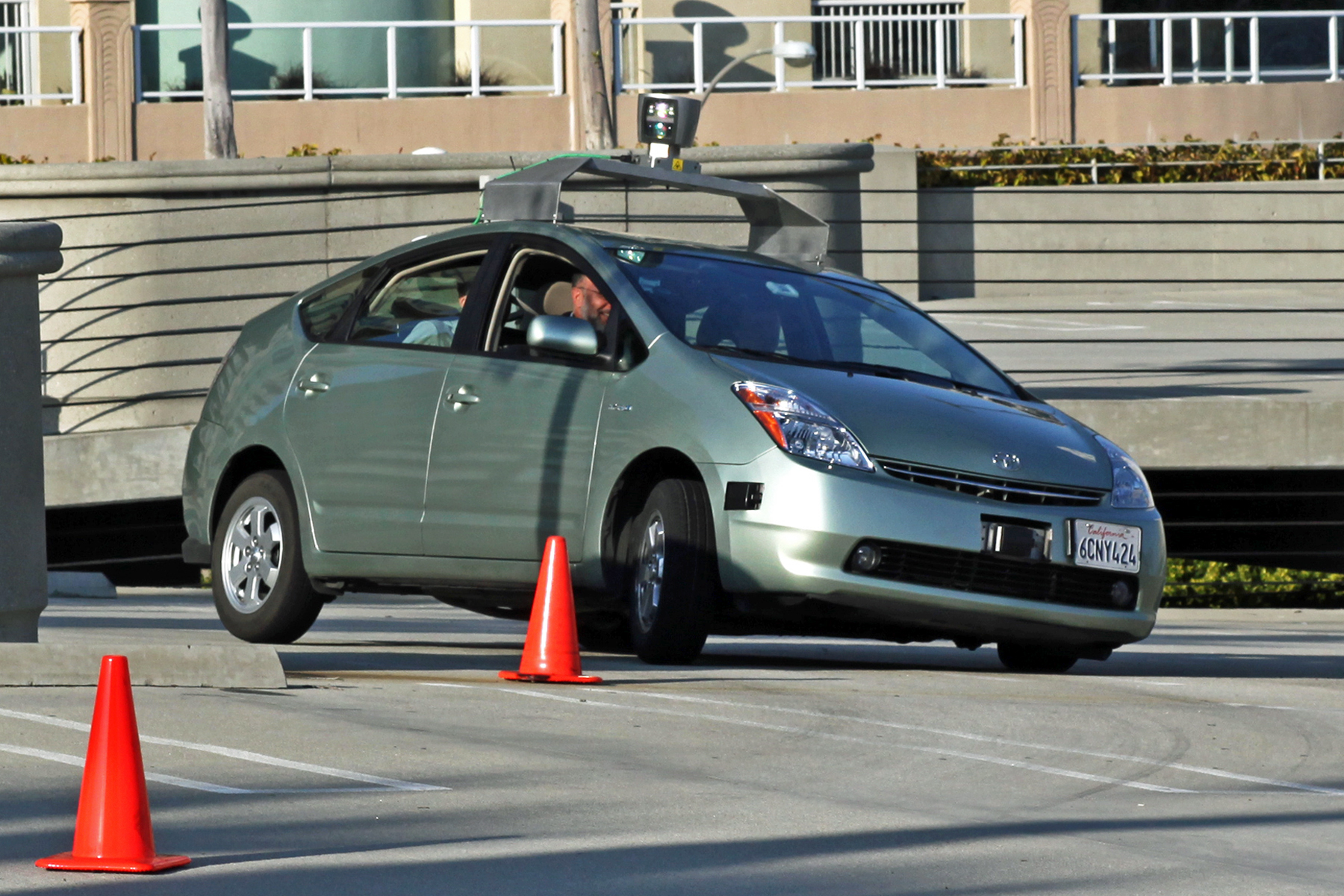
The trolley problem, which obsesses philosophers like a new shiny rock, even though it is a contrived and intentionally artificial example, does have SOME real world analogs.  The Google Driver will have to have an answer, either implicitly or explicitly ("The road is icy, you are skidding, and then change direction but can't stop.  There is a school tour ahead, with 12 children in the crosswalk.  On the sidewalk there is one old man.  Where do you steer?")

Here are some interesting thoughts.

Anyway, here is what had not occurred to me before.  Economists make everything euvoluntary by assuming perfect competition, with many equally good alternatives for all choosers.  Philosohers make nothing euvoluntary, by eliminating all of the alternatives and forcing people to choose under duress.  It could be Kant's "murderer at the door," forcing choice by threat of violence.  Or it could be the "trolley problem," forcing choice by circumstance. 

But most choices are not made in either conditions of perfect competition or in conditions of extreme duress.  So why do economists and philosophers say they want to study choice?  I'm afraid the Austrian economists have this right.

Tuesday, October 15, 2013

EE Goes to the Movies Ep. 3: Star Trek IV: The Voyage Home

For those of you who don't remember, the fourth Star Trek film was the one where Kirk and crew saved the earth from a giant space probe that was trying to talk to whales by going back in time on a stolen Klingon Bird of Prey. Filmed on location in San Francisco and Monterey (while I lived there no less), it was that piece of cinematic virtuosity that generously granted the world the phrase "nuclear wessels."

One of the more memorable scenes involved Kirk and a newly-resurrected Spock riding the bus to the Cetacean Institute (proxied nicely by the Monterey Bay Aquarium, again, while I was living in the NPGS housing), in which... well, look for yourself.


Imagine this scene if Hikaru Sulu had been better at reading Klingon and had set the time coordinates for 2013 instead of 1986. They would have still gotten their whales, Montgomery Scott would have been able to use a voice-to-text program, and the "punk" on the bus would have had buds stuffed all up in his ear chasms.

The intervening 27 (oy!) years have rendered public transit more civil. More euvoluntary. If you're Leonard Nimoy, more craggy. At least part of the march of progress has been to tidy the place up, to reduce externalities (close your eyes and remember how bad the litter problem was in the 70s), to make it more comfortable for people to be polite.

The thing that continues to amaze me is that much of it is the result of individual action. The caricature econo-mystical "rational" actor would chuck a fast food bag out of a moving car so long as MC<MB. The private cost of littering (or of listening to terrible ersatz punk rock loudly on a city bus) is quite low, so long as there are no Vulcans in neck-pinching distance, so we should expect to see a lot of it. But actual folks are no more Max-U types than I am a Nile plover. Engineers work diligently on products that have the delightful side effect of injecting peace into our daily commute. Environmental conscientiousness tropes stay the hands of would-be litterbugs. Shame keeps errant nosepickers' fingers away from nostrils until a touch of surreptitiousness is available. The world is ever more euvoluntary.

And I think I'd like to take the opportunity to thank Shatner and Nimoy for their contribution. Who knows, without this scene, perhaps the guys at Apple might not have put quite so much thought into making the experience of enjoying music a bit less public.

Friday, December 28, 2012

Trolley Problem

Alex Tabbarok raises a question about the "Trolley Problem," the famous (and largely pointless, because hypothetical) moral dilemma exercise.

Except Alex points out it is no longer pointless:  the Google has to decide.

Here's my question:  does it matter if the one person, or the fat man, consent?  Isn't this the ultimate "coerced by circumstance" problem?  The only reason you want to kill the one person is that the other option is even worse.  This is clearly not a voluntary choice.  Nonetheless, the premise of the exercise is that by doing nothing you "cause" even more harm.  Or, allow more harm.  Or, fail to prevent even more harm when by acting you could have prevented harm. 

Maybe it's not so pointless after all?

UPDATE:  To put some context on the example:  There is a school bus ahead, full of children.  And a single old lady on the sidewalk.  The road, unexpectedly, is icy, but there is still enough control to steer, though not stop.  What does the Google program choose?  Should it let momentum rule, and take no action, therefore smashing into the school bus?  Or should it take an actual action, and swerve up onto the sidewalk, killing the old lady for sure but saving 50 children?  This is NOT hypothetical.  Stage 1 is to program avoiding school buses, even if you might suffer more harm yourself (should the program do this?  can the owner disable it?  SHOULD the ownder disable it?)  Stage 2 is to weigh the costs of avoiding the bus.  Should you hit the old lady?  Humans would probably just panic, or act essentially randomly.  But in this case the Google has enough time to decide:  What is the right thing to do?

Wednesday, April 18, 2012

Double or Nothing

Our first variation on the Desert Scenario will test moral intuitions surrounding a familiar tool in the economists' utility belt: distributional efficiency. But first, let’s review our standard scenario to refresh our memory.

“It goes like this. There’s a guy dying of thirst in the desert. We’ll call him Jimbo. Jorgé drives up in his Taco Truck (because street food is awesome), and offers Jimbo a bottle of water for $10,000 (the exact amounts don’t matter, here; it’s just a boat-load of cash). Jimbo protests that the water is too damn high, but Jorgé just shrugs his shoulders and starts to drive off. Jimbo happens to have ten grand in his wallet, so he shouts for Jorgé to stop, forks over the cash, and narrowly escapes death.”

Monday, April 9, 2012

Don't Go Chasing Windfall Profits

Please stick to the normal returns and cash flow you’re used to.

A while back, Sam introduced us to Trolley Problems. I refer to Trolley Problems as a proper noun, since it’s a category of thought-experiments (Gedankenexperimente) that I will be using to test our moral intuitions vis-à-vis euvoluntary exchange.

As Sam put it, “The purpose of these thought exercises is to get at justice or fairness heuristics.” I’d like to engage you, dear readers, in a conversation about a particular Trolley Problem I’ll call “Water in the Desert”. Be forewarned, however, that the gods of rhetoric will smite thee mightily if you refuse to take these Gedankenexperimente as-is. Since the optimal amount of smiting is in the neighborhood of zero, I humbly suggest you take on the role of an interested conspirator, and refrain from poking holes in the thought-experiment.

Thursday, January 26, 2012

The San Francisco Treat


Ed.: I originally wrote this prior to my first post here, so please don't be thrown by the concluding paragraph.

The standard trolley problem goes something like this: you find yourself inexplicably drinking a soymilk latte in the Mission District a few blocks up from the The Embarcadero when out of nowhere a runaway trolley comes rumbling down yonder boulevard. Alack! The trolley is laden with passengers and if not stopped, ‘twill surely crash into the Bay, killing all and sundry aboard. Luckily for the people aboard, a portly gentleman out for his morning constitutional has lost his footing and fallen on the tracks and if no action is taken by you, the trolley will come to rest against his meaty flanks, the passengers shaken but otherwise unharmed. The man, naturally, as happens when struck by a runaway trolley will surely perish. The question then is, do you roll him out of the way? If you do, he lives and the people on the trolley die. Spoiler: most people will not respond that they roll him out of the way. Smugly perhaps, the person posing the scenario then alters it ever so slightly—instead of the fat guy having already fallen on the tracks, your choice is now to push him on the tracks or do nothing. Spoiler the second: most people again elect to do nothing (a close second is to look pained for a moment, then reluctantly admit that they’d push him, but only with much regret). Economists, heartless vermin they are, sacrifice the few for the many without batting an eye, and I suspect they do so without even so much as a fleeting thought to Spock’s ad hoc repair of the Enterprise inside the Mutara Nebula. To the economist or the (suppress your shudders, please) utilitarian, the two variants are perfectly identical, except for a few extra calories burned… fat guys dies so that 20 strangers may live.